
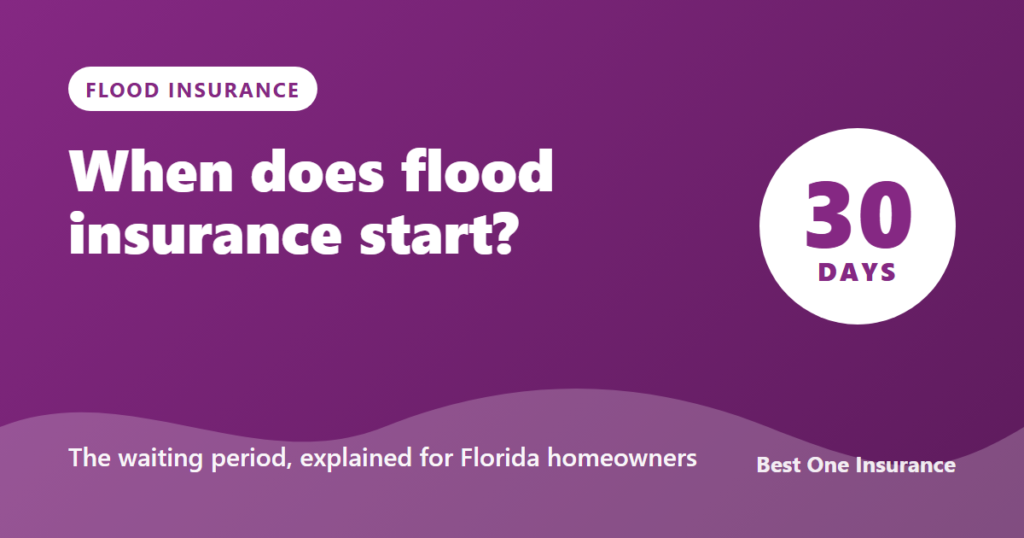
Flood insurance does not start the day you buy it. A policy from the National Flood Insurance Program (NFIP) normally takes effect 30 days after the purchase date, so the time to arrange coverage is well before a storm is in the forecast. This article explains the waiting period, the situations where it is shorter, and what Florida homeowners can do to avoid a gap.
How long is the flood insurance waiting period?
For an NFIP policy, coverage begins 30 days after you buy it. FEMA states this directly: “Your flood insurance coverage will go into effect 30 days after your date of purchase.” A flood that happens during those 30 days is not covered by the new policy.
The waiting period exists so that coverage is bought as protection ahead of time, not after a flood is already on the way. In Florida, hurricane season runs from June 1 to November 30, which means a policy bought in early May is active for the start of the season, while one bought when a storm is named usually is not.
When the waiting period is shorter
FEMA lists four exceptions to the 30-day rule for NFIP policies:
- Buying with a mortgage. There is no wait if you buy flood insurance while making, increasing, extending or renewing a mortgage. This is the most common case for home buyers: the policy can start at closing.
- Changing coverage at renewal. There is no wait if you change your coverage while renewing your policy.
- A flood map change. The wait is one day if your property is placed in a newly designated high-risk flood zone and you buy a policy within 12 months of the map update.
- Wildfire on federal land. The wait is one day if a flood is caused or worsened by a wildfire on federal land and you buy within 60 days of the fire’s containment date.
Outside of these cases, plan on the full 30 days.
Do private flood policies have a waiting period?
Private flood insurance is sold by insurance companies outside the NFIP, and each company sets its own waiting period. It is often shorter than 30 days, but it is not the same everywhere, and insurers commonly stop accepting new policies once a named storm threatens the state. Ask for the effective date in writing before you rely on a policy.
Why this matters for Florida homeowners
Most homeowners and renters insurance does not cover flood damage. Flood is a separate policy, and without it, rising water from heavy rain, storm surge or an overflowing canal is paid for out of pocket. This is true outside high-risk zones too: a lower-risk designation on the flood map means flooding is less likely, not impossible.
An NFIP policy covers up to $250,000 for the building and up to $100,000 for belongings in a home. Homes that need higher limits can often add private or excess flood coverage.
How to avoid a gap in coverage
- Buy before hurricane season. Count back at least 30 days from June 1.
- If you are buying a home, start early. Ask for a flood quote as soon as you are under contract so the policy can begin at closing.
- Keep your policy active. Renew on time. A lapse can mean a new waiting period.
- Review your limits at renewal. Changes made at renewal take effect without a wait.
- Compare NFIP and private options. The price, the limits and the waiting period can all differ.
Get a flood insurance quote
Best One Insurance is an independent Florida agency. We compare NFIP and private flood options from multiple insurance companies and tell you the date each one would take effect. Request a quote or call (954) 944-3928, Monday to Friday, 8:30 AM to 5:30 PM ET.
Related reading: our guide to flood insurance in Florida and our flood insurance page.
Sources: FEMA, FloodSmart.gov “Buy a Policy” and FEMA.gov “Flood Insurance” (checked November 23, 2026). This article is general information, not a statement of coverage. Your policy sets the terms that apply to you.
Questions about your coverage?
A licensed agent can review your situation and compare options from multiple insurance companies.